What I build when no one's briefing me.
Three things I shipped on my own time — a podcast, a Chrome extension, and a small online shop. Each one is me playing every role at once: research, design, build, launch.
Cycle Calendar
A colour-coded menstrual-phase calendar that lives right inside Google Calendar — personalised to your own rhythm, built end to end with Claude.
I plan both my work and personal life in Google Calendar — but women's energy isn't flat across a month. My cycle data lived in a separate period-tracking app, walled off from the one place I actually plan. So I'd consistently overestimate what a given week could hold, then end it either exhausted or frustrated that I hadn't finished what I'd scheduled.
Cycle Calendar closes that gap. It takes three numbers — last period date, period length, cycle length — and generates a dedicated “My Cycle” calendar with every phase laid out in colour, right alongside the meetings and plans I already keep there.
Existing tools didn't fit
I tried the alternatives first — Calessa, “Add your period to Calendar,” and “Period Phase Calendar” — but each one demanded an account, covered only the period itself, or simply didn't work.
What I chose to build — and not
A simple, functional Chrome extension · no registration · English and Ukrainian · events generated from the data you enter · a separate calendar you can hide or delete in one click.
Symptom tracking · mood logging · notifications and reminders · native iOS/Android apps · account creation and cloud sync. Staying out of these kept it private and shippable.
Built with Claude
This was a one-person project, and Claude was the team. I used it across the whole arc:
- PRD drafting for the system design
- Building the solution itself
- Privacy Policy and Terms of Service
- Bilingual copywriting for the phase descriptions
- Deploy assistance
- Meeting the Chrome Web Store requirements
- Landing-page content
- GitHub and domain to ship on
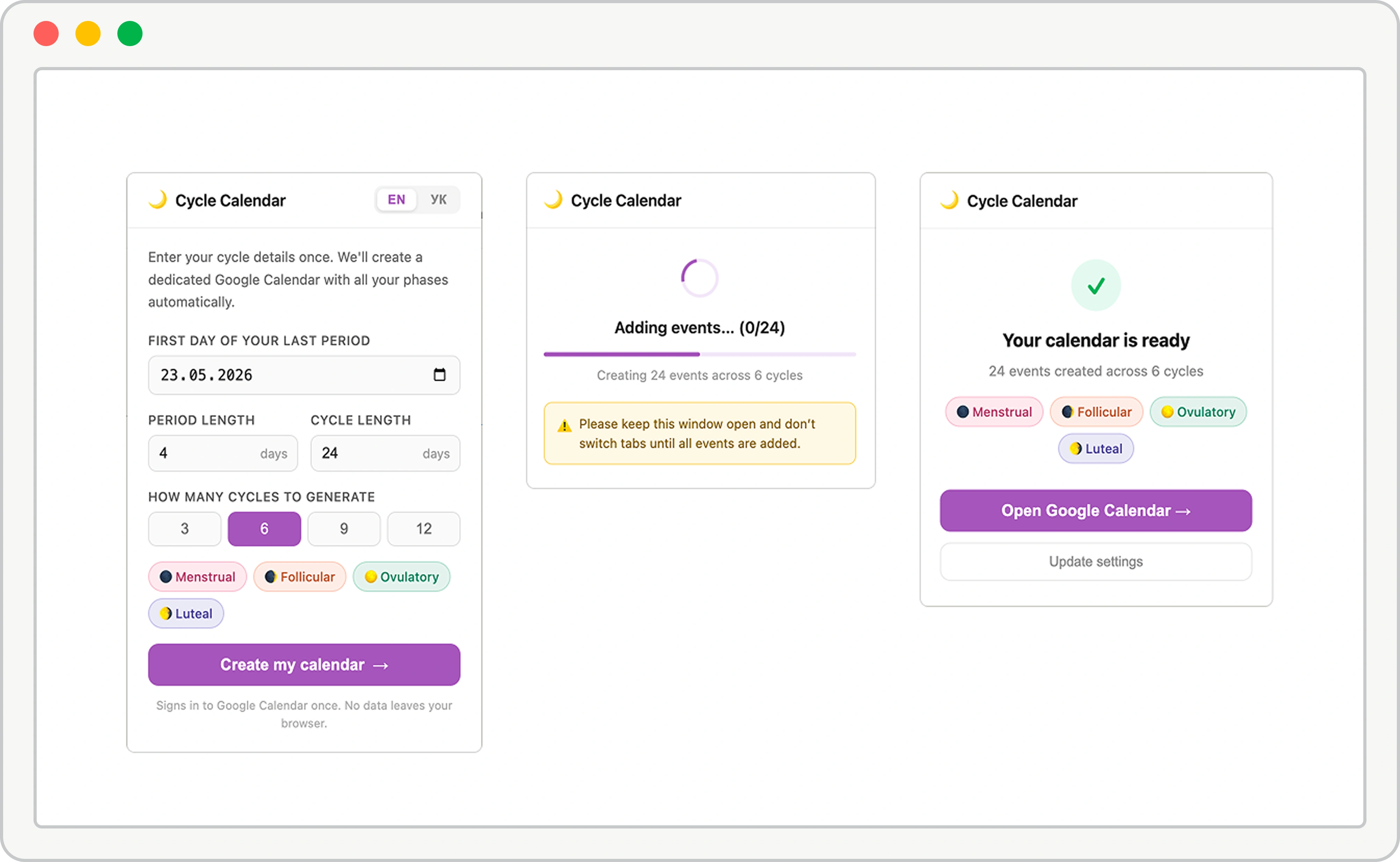
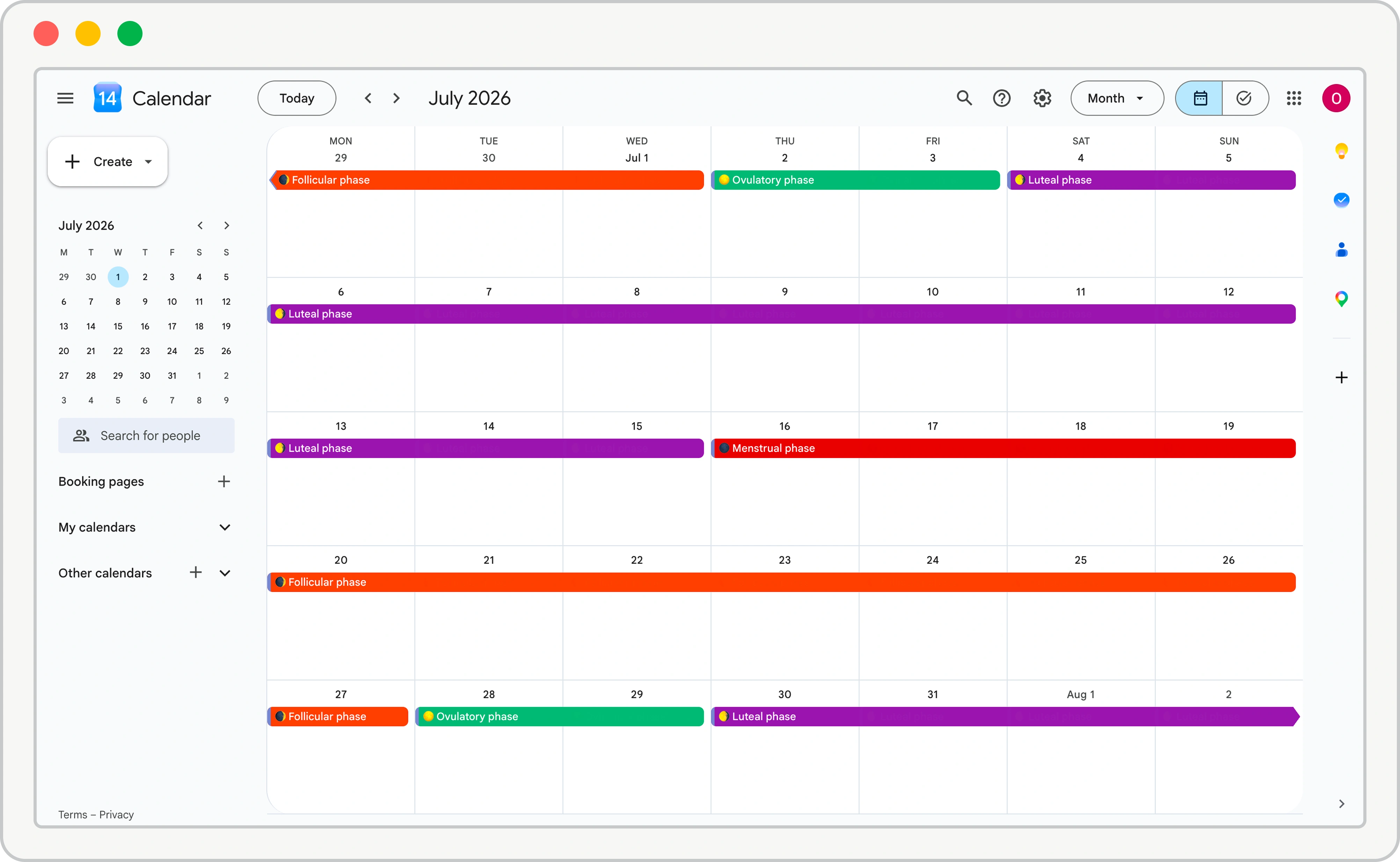
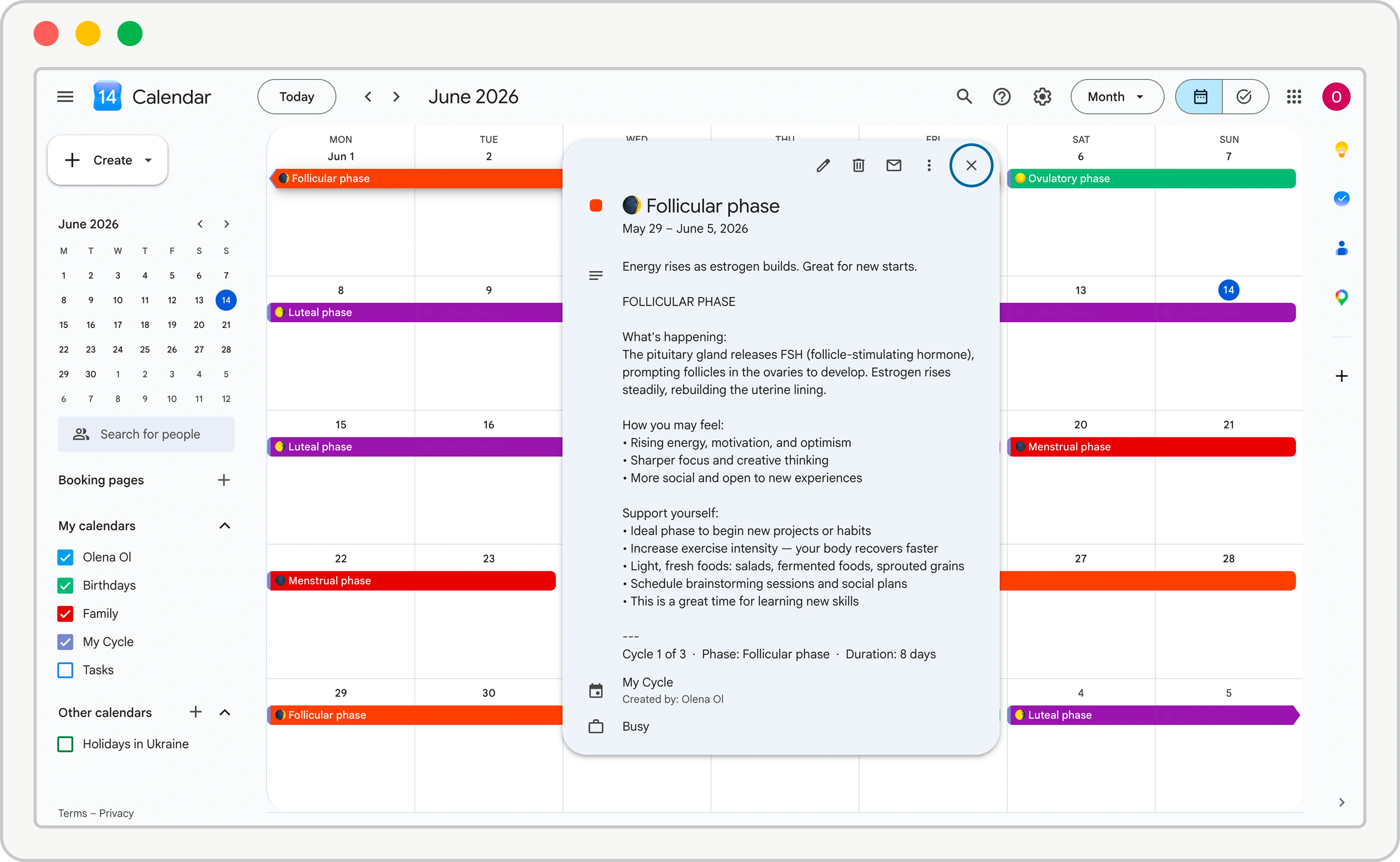
Designed as an informational tool — not for medical decisions, diagnosis, or contraception. That boundary is stated plainly in the product itself.
Producing a podcast
An interview show I built from zero during the pandemic — talking to interesting people about their education, careers, and the things they make on the side.
After moving to Estonia and starting a blog, I wanted a sharper way to grow an audience — so I treated a podcast like a product. I ran market research on Ukrainian shows for women interested in career and self-development, surveyed my target audience (30% already listened to podcasts), and compared equipment, remote-recording services, and editing software before recording a single word.
Then I designed the assembly line. I mapped an eight-step process that took each episode from zero to a finished, ready-to-listen interview — research, outreach, recording, editing, artwork, audiograms, publishing, promotion. Distribution leaned on podcast pitches, a news-portal feature, my Telegram channel, and guests resharing to their own audiences.
The brand I built around it
I designed the show's whole visual identity — cover art, episode templates, audiograms, and promo posts — so every episode shipped looking like part of one set. It still holds up, so it's earned a spot here.
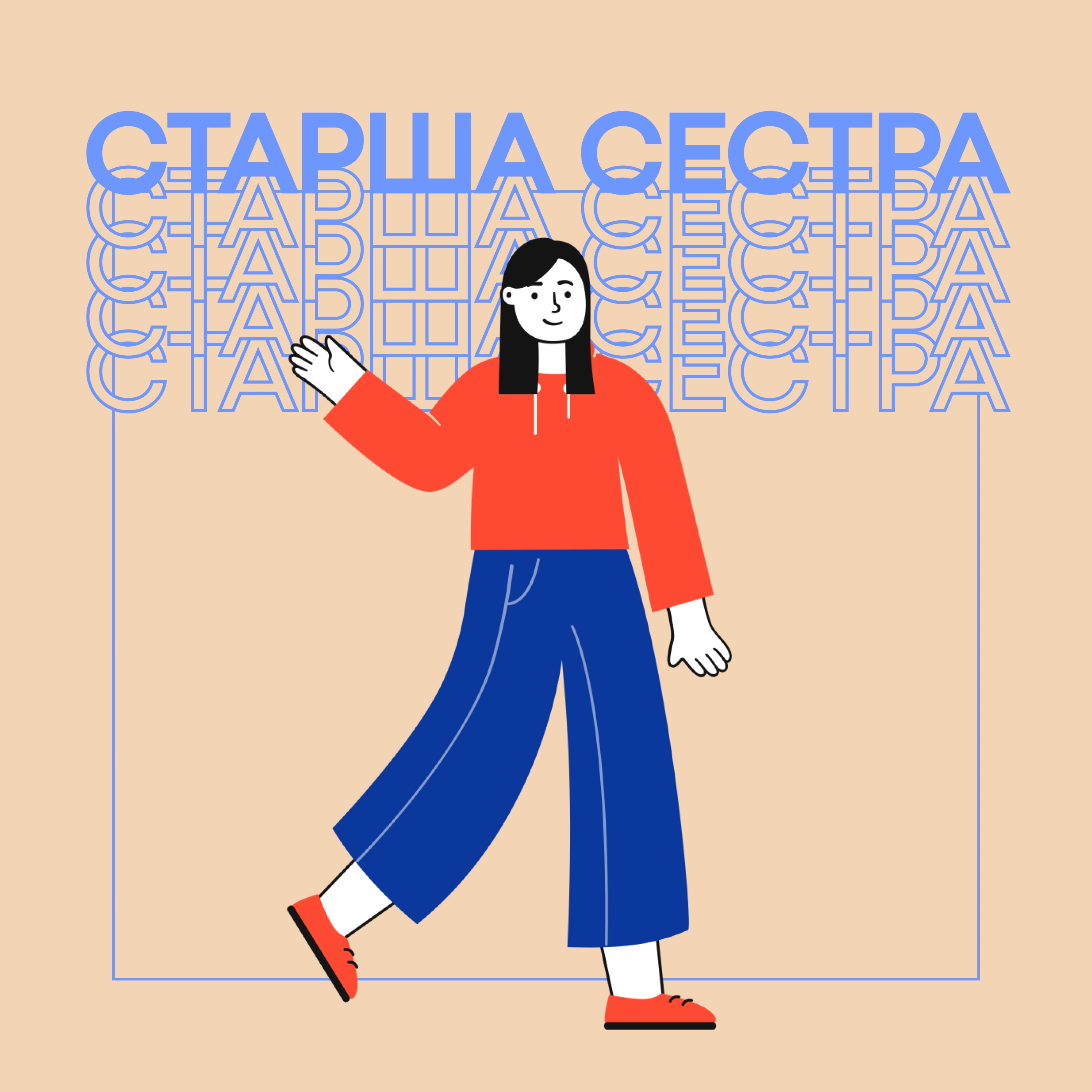
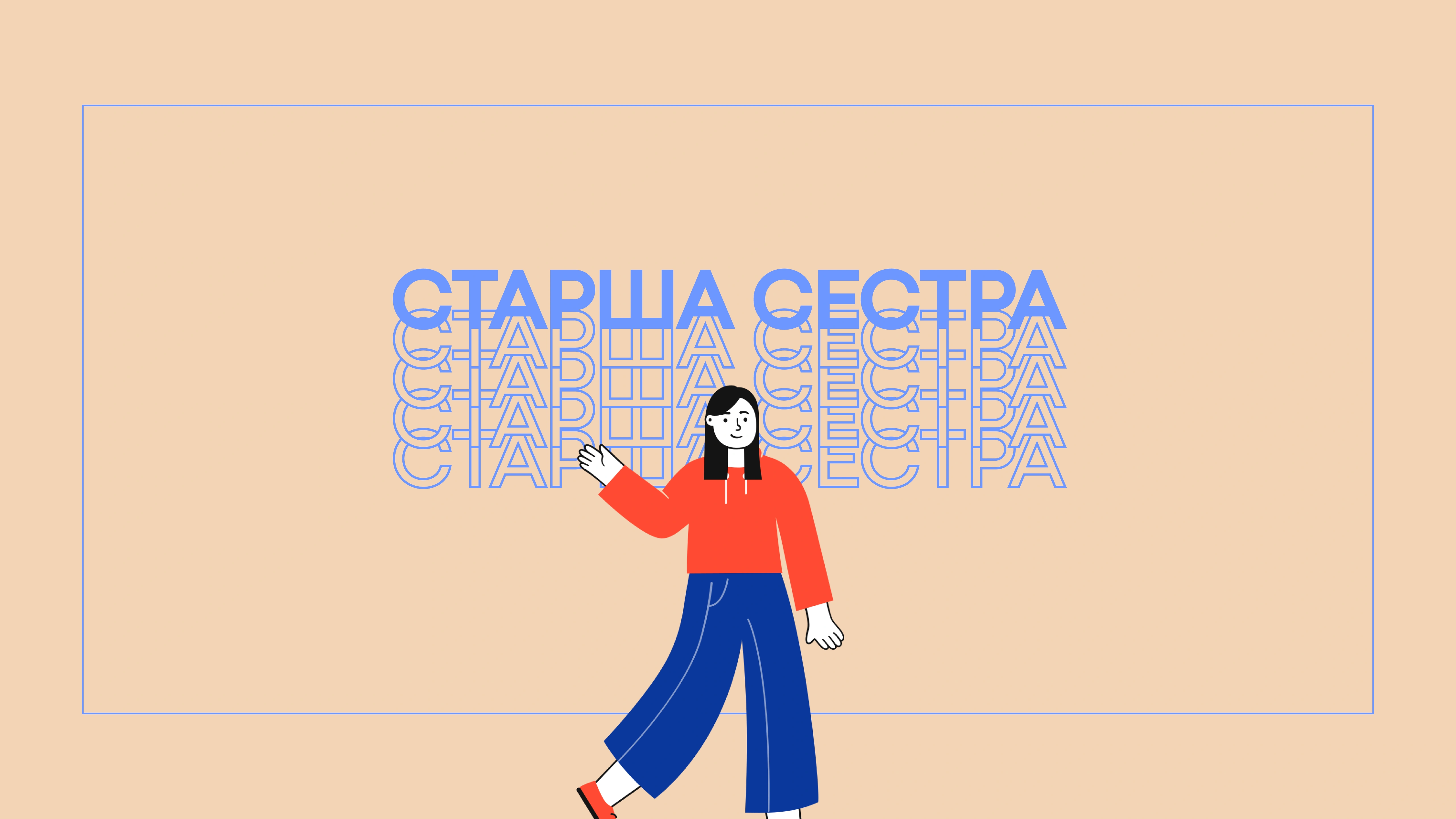
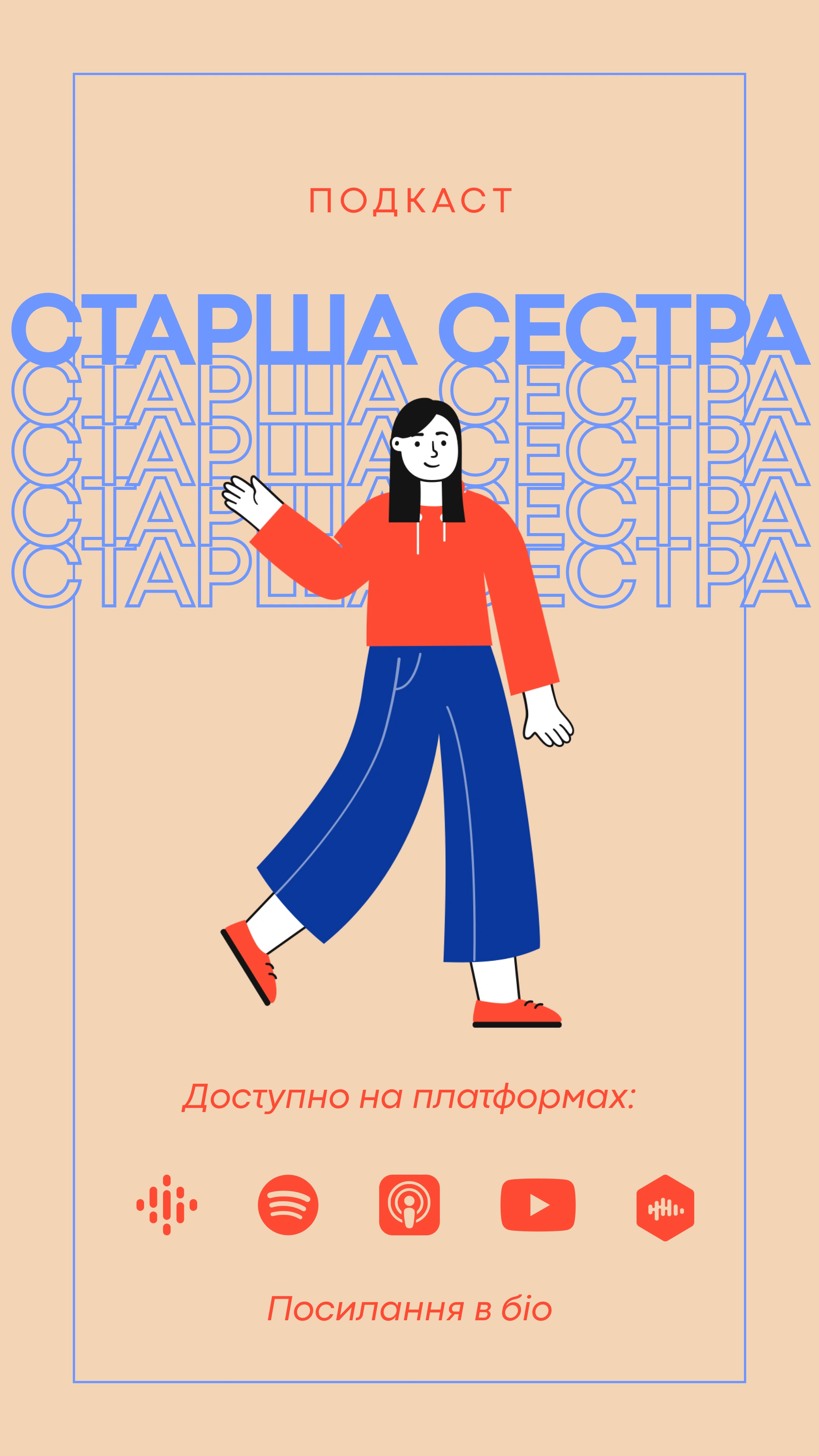
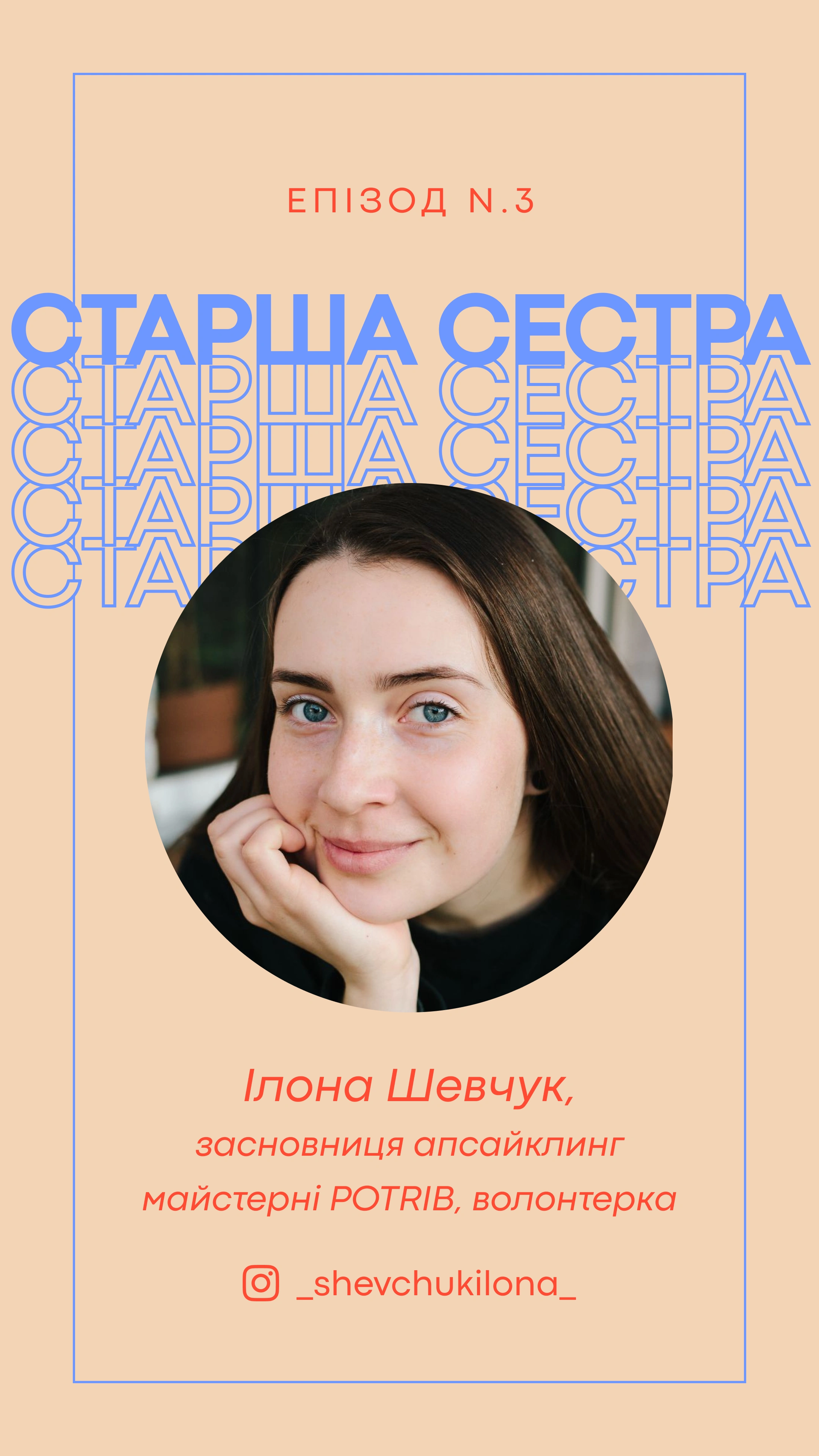
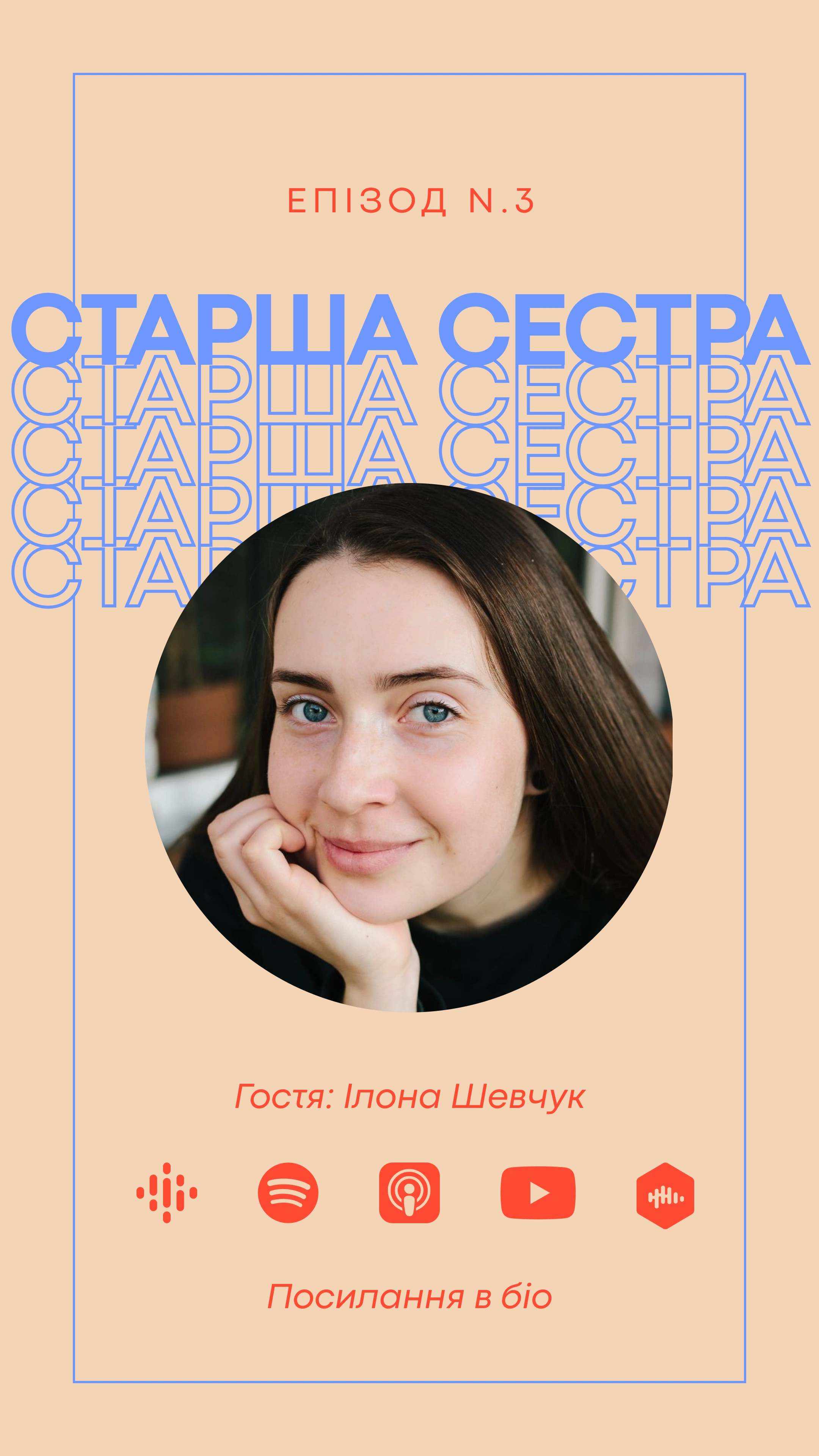

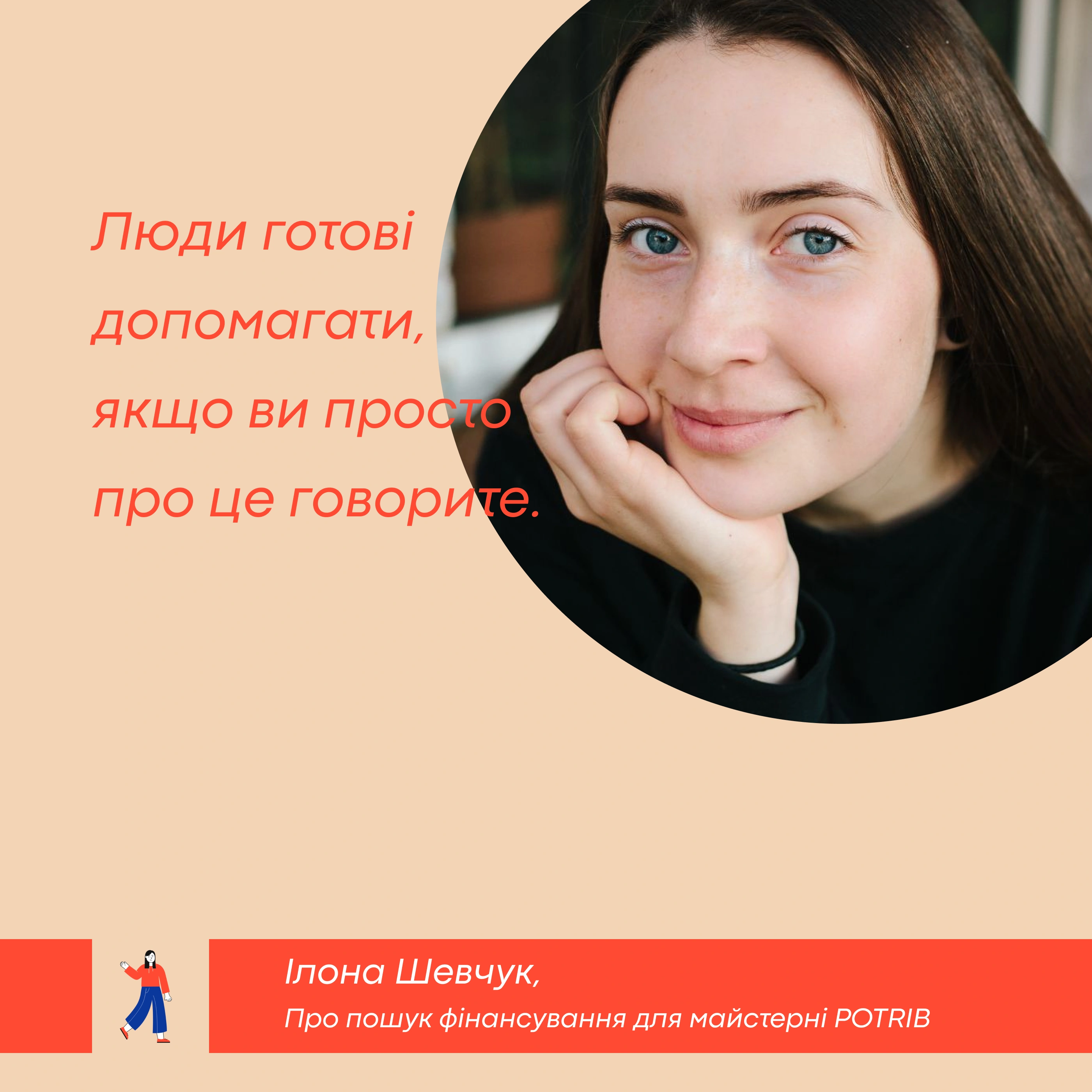
What I'd do differently: shorter formats, a co-host or editor to share the load, and partnerships earlier. The lasting wins were softer — much sharper interviewing skills, and the confidence that comes from shipping something end to end, alone.
Vzir.shop
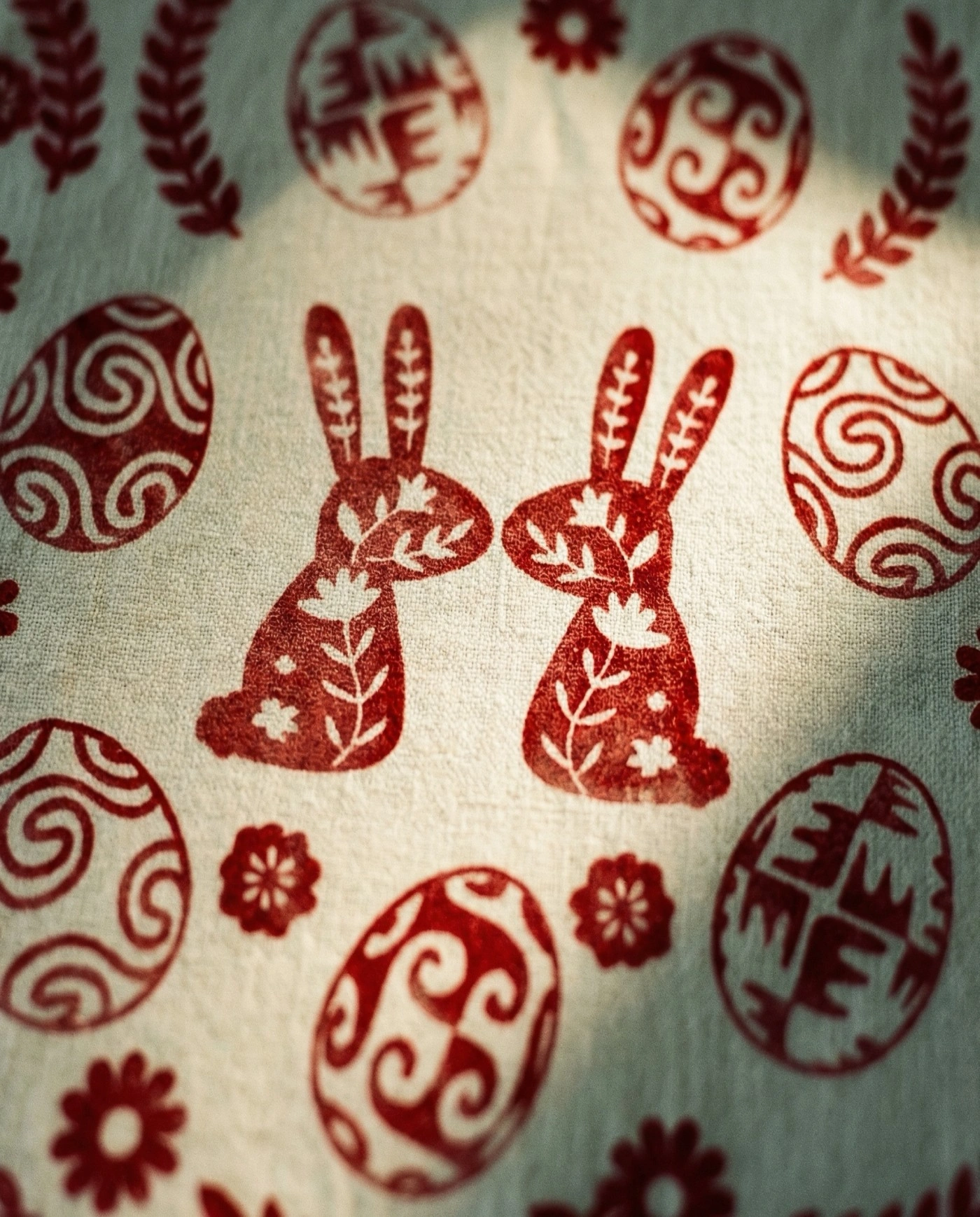
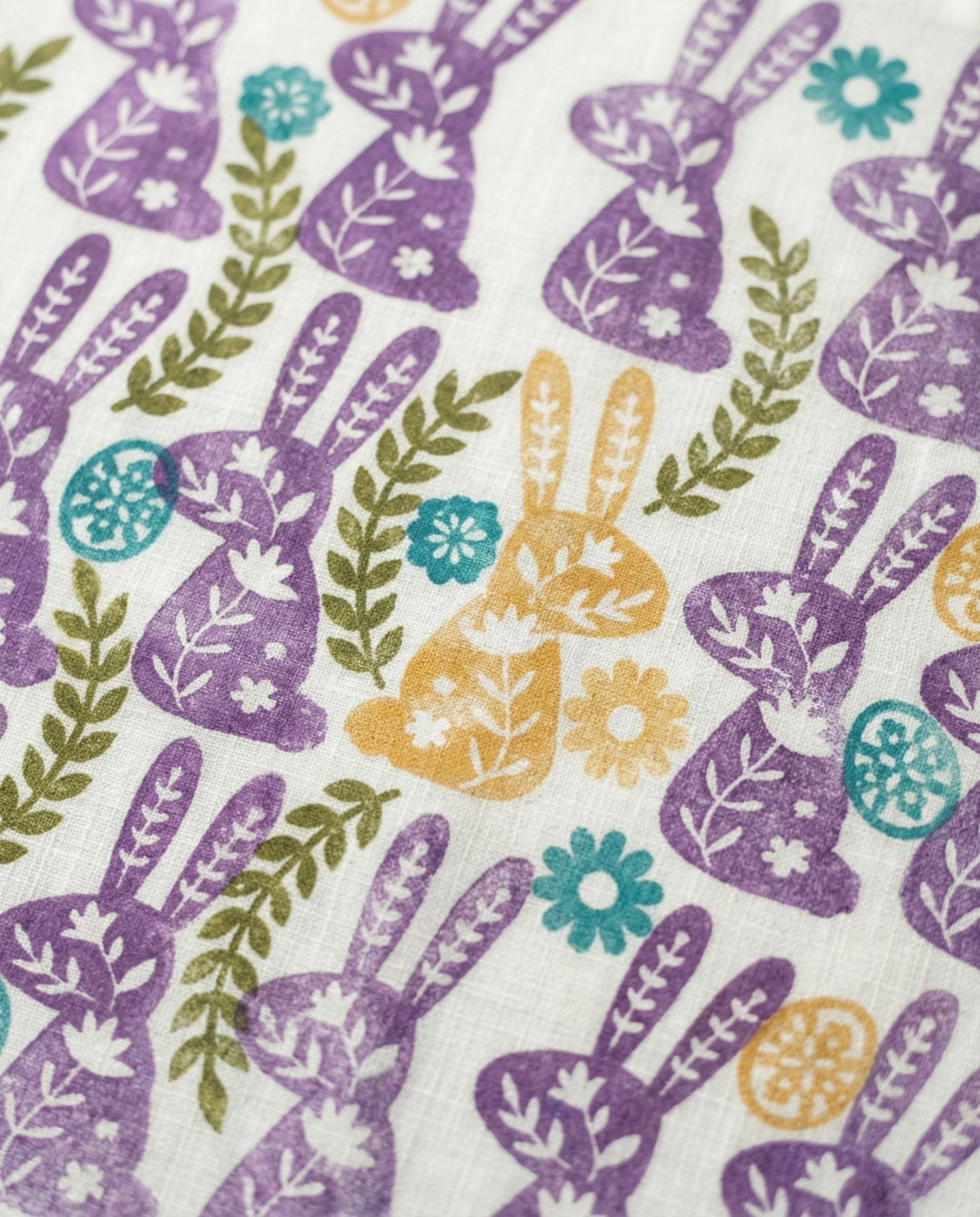
A hobby that turned into a storefront. I took up block printing, got curious whether anyone would buy it — and built the shop to find out.
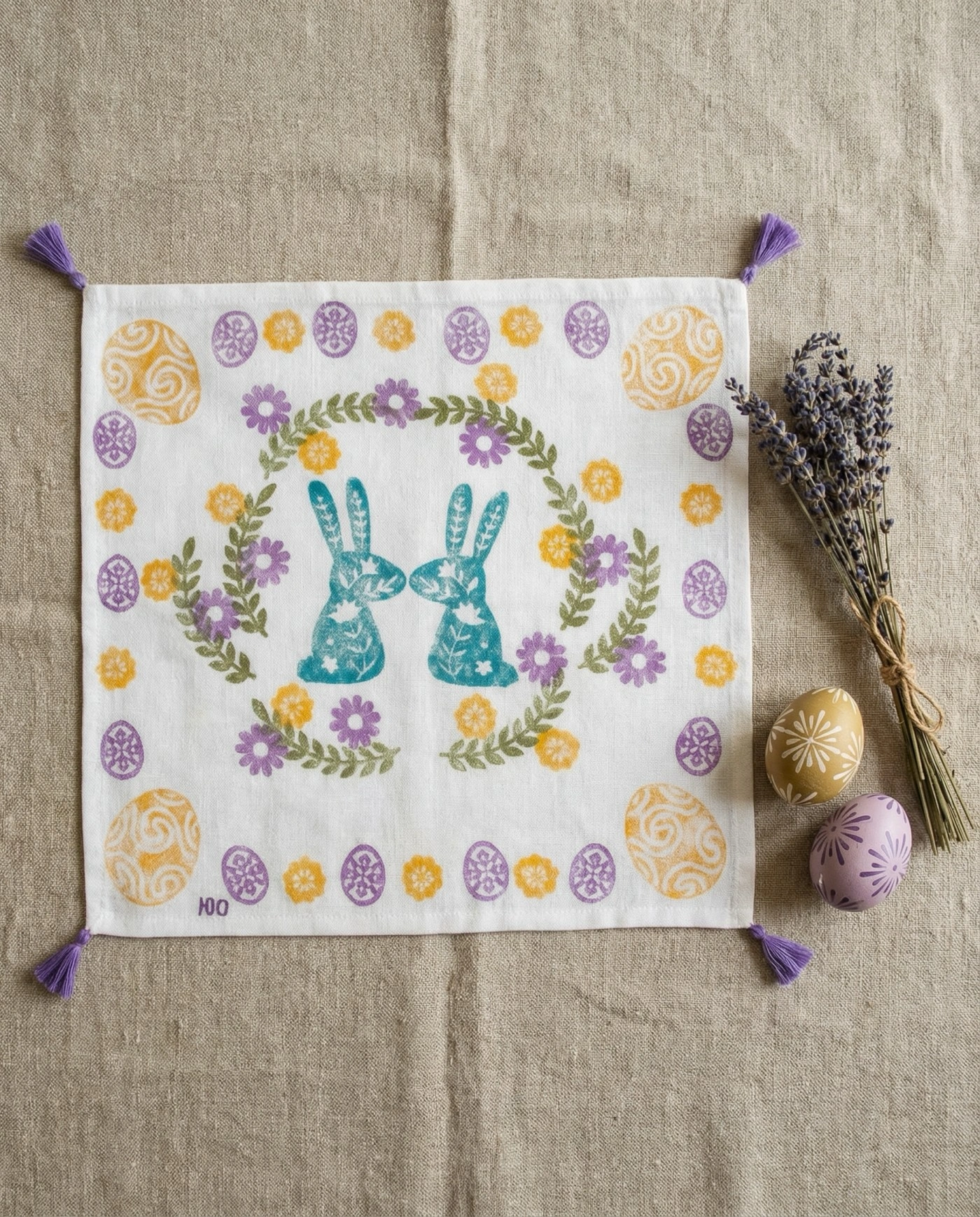
I pursued block printing as a new hobby, and then got interested in whether somebody would actually be willing to buy it. More recently I used Claude Code to build and ship vzir.shop, an e-commerce site for the small textile brand — going from idea to a live storefront myself.
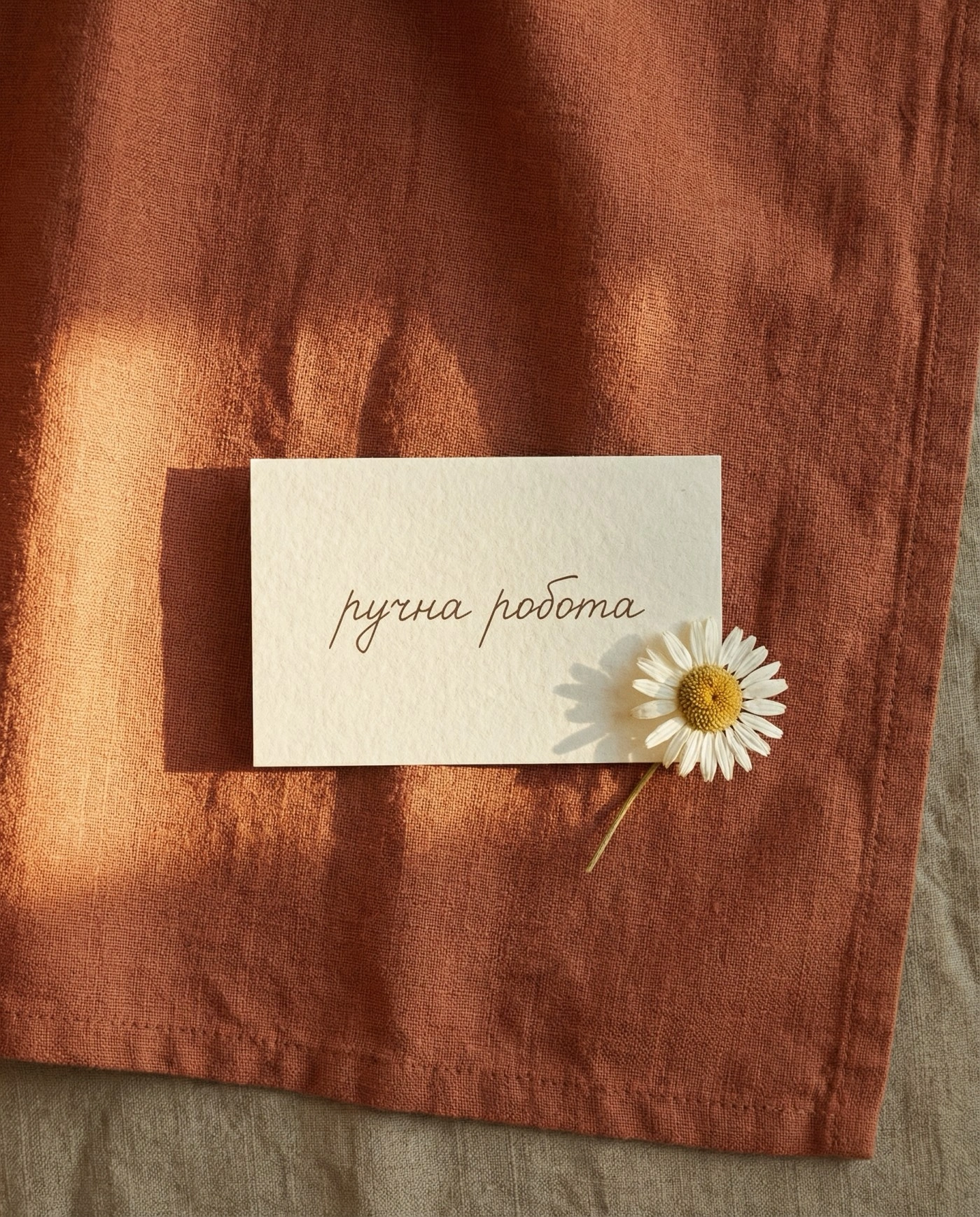
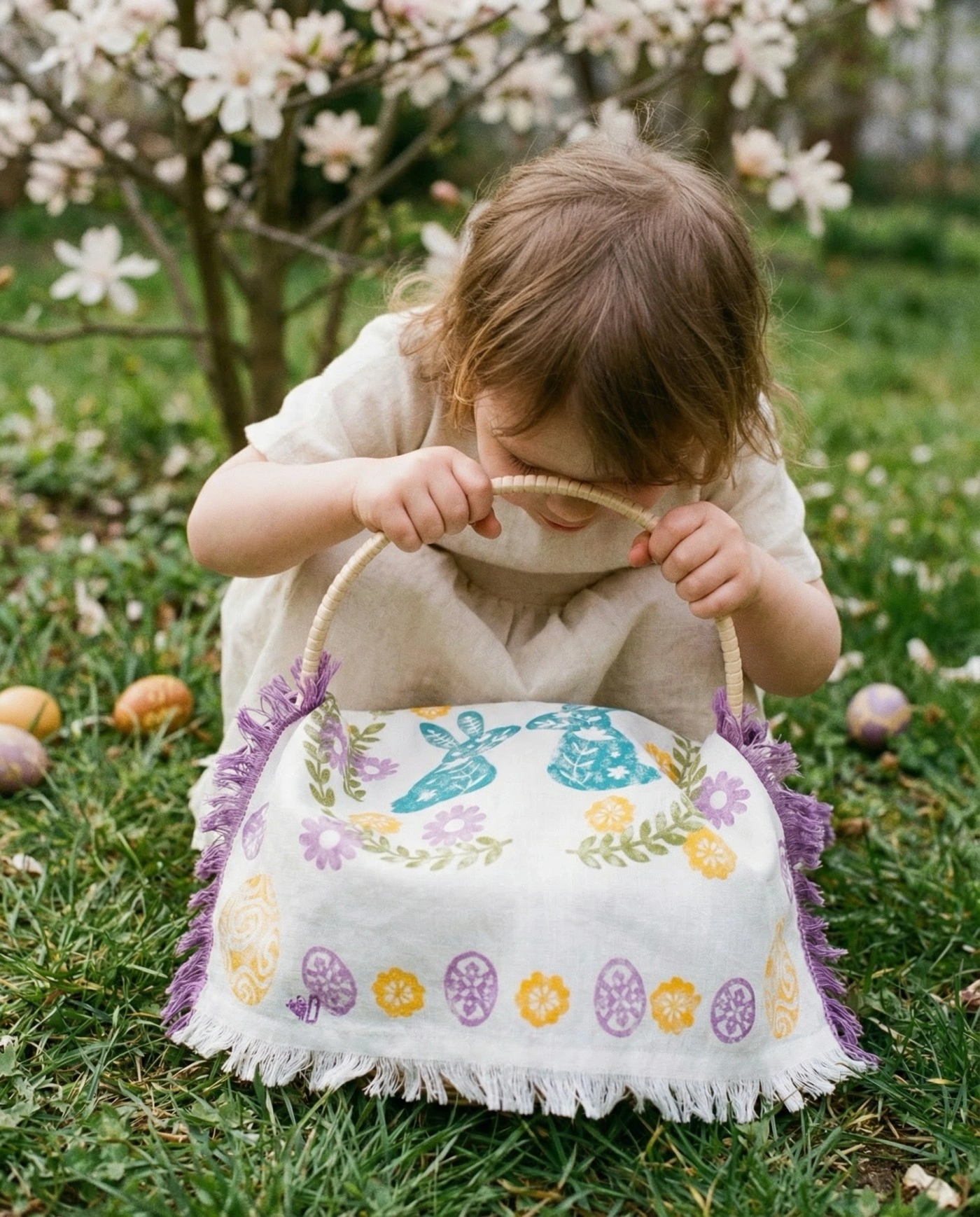
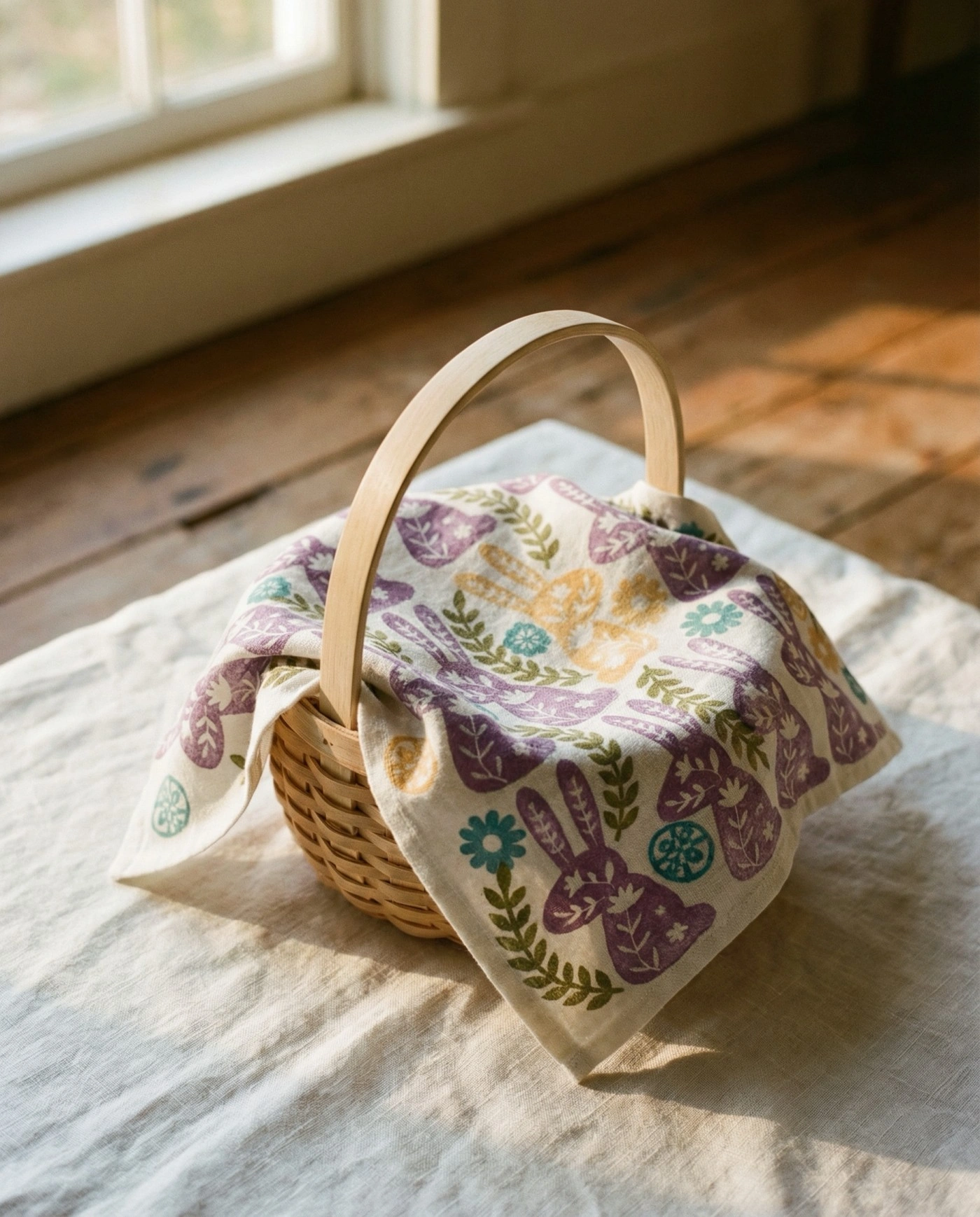
For the catalogue, I used Claude and Gemini's Nano Banana model to produce high-quality product images — clean, consistent shots of the printed pieces, also used for an Instagram launch. The carousel below is a selection of those AI-generated images.